
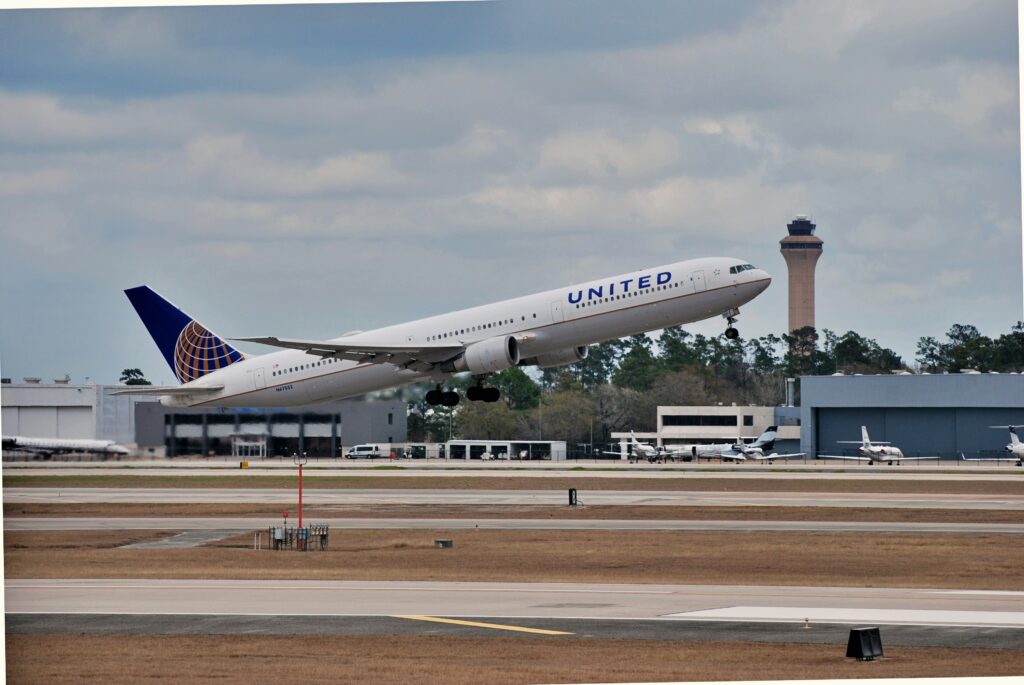
The United Airlines Flight UA770 emergency diversion occurred on May 27, 2025, during a routine transatlantic flight from Barcelona (BCN) to Chicago O’Hare (ORD). What began as a normal long-haul journey quickly turned into an unexpected situation when a technical anomaly was detected mid-air over the Atlantic Ocean.
What Triggered the Emergency?
While cruising at approximately 37,000 feet, the flight crew noticed a technical irregularity that required immediate evaluation. Following global aviation safety protocols, the pilots transmitted squawk 7700, the universal code for a general emergency.
Declaring squawk 7700 ensures priority handling from air traffic control and immediate coordination with nearby airports. Although airlines rarely disclose detailed mechanical specifics, such situations typically involve pressurization alerts, sensor malfunctions, or other precautionary system warnings.
The decision behind the United Airlines Flight UA770 emergency diversion was purely precautionary.
Diversion to London Heathrow
After declaring the emergency, the aircraft diverted to London Heathrow Airport, one of Europe’s busiest and best-equipped international hubs.
The Boeing 787-9 Dreamliner made a controlled descent and landed safely. Emergency response teams were positioned on standby as part of standard aviation protocol. Fortunately, no injuries were reported.
The safe landing demonstrated the effectiveness of pilot training, aircraft engineering, and coordination with air traffic controllers.
Passenger Experience Onboard
For passengers, the sudden diversion naturally caused concern. However, cabin crew remained calm and professional, providing consistent updates throughout the flight.
After landing, United Airlines arranged accommodations, rebooking assistance, and onward travel support. In situations like the United Airlines Flight UA770 emergency diversion, airlines focus on minimizing disruption while maintaining strict safety standards.
Aviation Safety Procedures Explained
Emergency diversions are uncommon but not rare in modern aviation. Aircraft like the Boeing 787-9 are equipped with advanced monitoring systems designed to detect even minor anomalies.
Declaring squawk 7700 gives pilots immediate landing priority and ensures ground emergency teams are prepared. The UA770 incident highlights how layered aviation safety systems are designed to prevent escalation and protect passengers.
Airline Response and Inspection
United Airlines later confirmed the diversion was precautionary. After landing, the aircraft underwent detailed maintenance inspection before returning to service.
Such post-incident checks are standard across the aviation industry and reinforce reliability and operational safety.
Frequently Asked Questions
Why did United Airlines Flight UA770 divert?
A technical issue prompted the crew to declare an emergency as a safety precaution.
Where did the flight land?
It landed safely at London Heathrow Airport.
Was anyone injured?
No injuries were reported.
What does squawk 7700 mean?
It is the international aviation code indicating a general emergency.
How common are emergency diversions?
They are rare but handled professionally under strict global safety regulations.
Conclusion
The United Airlines Flight UA770 emergency diversion serves as a strong reminder that aviation safety always comes first. While diversions may create temporary inconvenience, they reflect a system built on precaution and professionalism. Thanks to trained pilots, modern aircraft technology, and coordinated emergency response, the flight landed safely — reinforcing trust in global air travel.